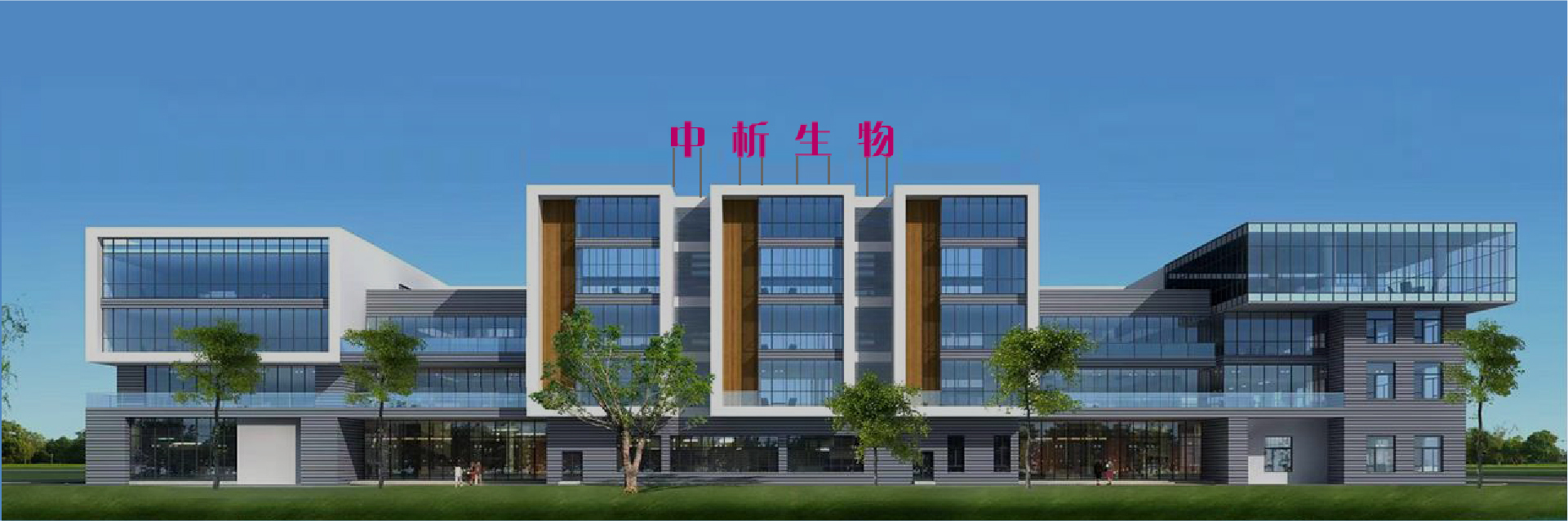
Suzhou Zhongxi Precision, established in 2019, is headquartered in Suzhou, China. The company positions itself as a full-chain manufacturing expert, supporting innovation in the automation and automotive industries. Leveraging the technological strength of its parent company, Zhongxi Biotechnology, it is committed to becoming an innovative technology company in the field of life science automation.
The company currently has 100 employees, covering the entire industry chain including R&D, production, sales, and technical services. Over 30% of the employees are core R&D personnel. The company owns two manufacturing bases: Suzhou Zhongxi Precision Manufacturing Base and Xiangyang Zhongxi Diagnostic Consumables Automation Production Base.
Equipped with a cluster of CNC machines, lathes and CNC turning centres, achieving precision control to ±0.005mm
Coverage: Precision transmission components · Automation core components
CNC programming → High-speed turning → Precision grinding end-to-end process
Intelligent programming (zero redundant commands) + servo turning (micrometre-level precision)
Design → Machining → Inspection Full Process Monitoring
EDM Machines/Forming Machines/Coordinate Measuring Machines Working in Tandem
Raw Materials: USP Class VI medical-grade resin raw materials
Production Environment: Class 100,000 cleanroom facility
Sterilisation Process: Irradiation sterilisation or ethylene oxide sterilisation
Process Control: Managed in accordance with ISO 13485 quality system requirements
Design → Machining → Inspection Full Process Monitoring
EDM Machines/Forming Machines/Coordinate Measuring Machines Working in Tandem
Featuring an innovative, next-generation dual-rotating eagle-wing hinge design, it achieves a nearly perfect, seamless folding form. It also utilizes a composite layered screen, effectively absorbing and blocking stress for enhanced bend and impact resistance.
Verify the qualification documents of raw material suppliers (such as material certificates and factory inspection reports), confirming that the raw material models and specifications align with order requirements to prevent misdeliveries or mix-ups.
High-definition visual inspection equipment is employed to examine each batch of raw materials for surface flatness, colour consistency, and the presence of scratches or deformation, ensuring that the fundamental appearance of the raw materials meets the required standards.
Conducting full-spectrum analyser testing on metal raw materials to verify material purity against industry standards (such as nickel content in stainless steel and hardness base values for aluminium alloys), thereby preventing substandard materials from entering production.
Utilise laser outside diameter scanners or projectors to conduct critical dimension sampling inspections on primary raw materials such as bars and plates, ensuring their initial precision meets processing requirements.
Prior to each production batch, the first item is processed and key dimensions (such as hole position tolerances and flatness) are inspected using a Hexagon coordinate measuring machine. Only after confirming the correctness of process parameter settings is mass production commenced.
Following critical processes such as turning and milling, sheet metal bending, etc., 10% of semi-finished products are sampled. These are verified for machining accuracy using a two-dimensional measuring instrument, ensuring tolerances are maintained within ±0.005mm.
For moulded components and injection-moulded semi-finished products, material hardness is assessed using a hardness tester, while structural strength is verified via an electronic torque tester. This prevents performance non-compliance arising from parameter deviations during processing.
Inspection personnel shall cross-reference production process documentation to verify equipment operating parameters, ensuring each process stage is strictly executed in accordance with standards, and promptly correcting any deviations.
Perform full-dimension scanning of finished products using a coordinate measuring machine, comparing each item against design drawing specifications to eliminate dimensional deviations.
Manual visual inspection equipment is employed to examine the surface finish of finished products, the uniformity of paintwork, and the absence of defects at riveted/welded joints, ensuring appearance meets customer requirements.
Conduct assembly and fit testing on assembled finished products (such as precision structural components), perform sealing tests on injection-moulded parts (e.g., waterproofing and leak prevention), and validate the product's functional performance.
In accordance with ISO 9001 and TS 16949 international quality standards and RoHS environmental requirements, coating thickness is verified using a film thickness gauge to ensure products comply with industry regulations and customer-specific standards.
Full-chain manufacturing specialist
Suzhou and Xiangyang manufacturing bases
Deeply rooted in automation and the automotive industry
Experienced design team, offering custom manufacturing services: Processing to provided drawings, processing to supplied samples, processing to supplied materials, non-standard customisation, and bespoke customisation of products and processes.
Triple quality inspection gates + twelve meticulous engineering checks, coupled with internationally certified testing equipment, ensure every precision component meets standards for accuracy and stability.
24/7 response + dedicated engineer liaison, covering parts assembly guidance, maintenance recommendations, and full lifecycle tracking to ensure uninterrupted customer production.